 Chinese
 English
NEWS AND INFORMATION
|
Status of abandoned photovoltaic modules
With the rapid growth of photovoltaic power generation installed capacity, the amount of waste photovoltaic modules will surge, waste Improper disposal of discarded components not only causes environmental pollution, but also leads to waste of resources. At present, the large-scale scrap period of photovoltaic modules at home and abroad has not yet arrived, the module recycling industry is in its infancy, the supervision and management system has not yet been established, and there are problems such as immature technology and equipment, low recycling income and imperfect related policy systems. With reference to the newly promulgated Law of the People's Republic of China on the Prevention and Control of Environmental Pollution by Solid Waste, the development trend of photovoltaic module recycling technology is analyzed. It is believed that photovoltaic module recycling technology should pay attention to the reuse value of products, but also pay attention to the emission of pollutants and carbon in the treatment process, and it is proposed that the reduction, resource utilization and harmless development of photovoltaic modules should be realized in the whole life cycle.  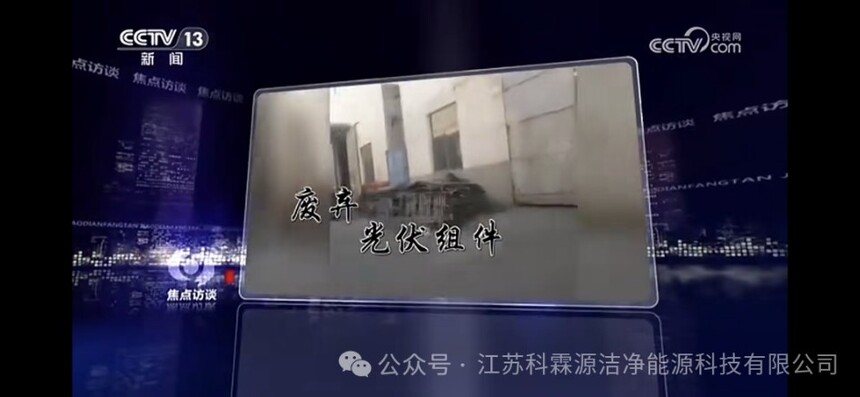 With the rapid development of photovoltaic power generation technology, the installed cost of photovoltaic power stations continues to decline, and the cost performance of power generation has been greatly improved, and photovoltaic power generation has become one of the lowest cost power generation methods. Driven by the "3060" dual-carbon goal, photovoltaic power generation and wind power generation will become the main body of power supply in China. Data released by the International Energy Agency and the National Energy Administration of China show that by the end of 2019, the global installed solar capacity has increased from 135.76 GW in 2013 to 580.1 GW, and it is expected that the cumulative installed global photovoltaic capacity is expected to reach 1 721 GW by 2030. With the large-scale centralized and distributed photovoltaic power generation projects put into operation, the disposal of waste photovoltaic modules will become increasingly prominent. Improper disposal of waste photovoltaic modules not only leads to environmental pollution, but also causes waste of resources. For large centralized photovoltaic power plants, the battery life is generally 25 years, but due to external factors such as climate conditions will accelerate the reduction of battery conversion efficiency or even failure. For distributed photovoltaic power generation projects, photovoltaic modules enter the market as electronic products, and the uneven quality of products leads to a large number of components that may not reach the retirement period and be eliminated in advance. From the first batch of concession projects and Golden Sun and photovoltaic building integration project put into operation, China's first large-scale production of photovoltaic modules has been running for 12 years, it is expected that in 2025, a large number of photovoltaic modules began to be scrapped, and around 2030 will usher in a peak. Based on the price of raw materials for photovoltaic modules in 2016, by 2030, the cumulative value of raw materials available through photovoltaic module recycling technology can reach $450 million, and by 2050, the cumulative value will exceed $15 billion, equivalent to the price of raw materials required to produce 60 million new modules. In addition, due to the increasing shortage of photovoltaic modules and the rising price of raw materials, the realization of high-value recycling of waste solar panels will become a key issue that the photovoltaic industry needs to pay attention to.  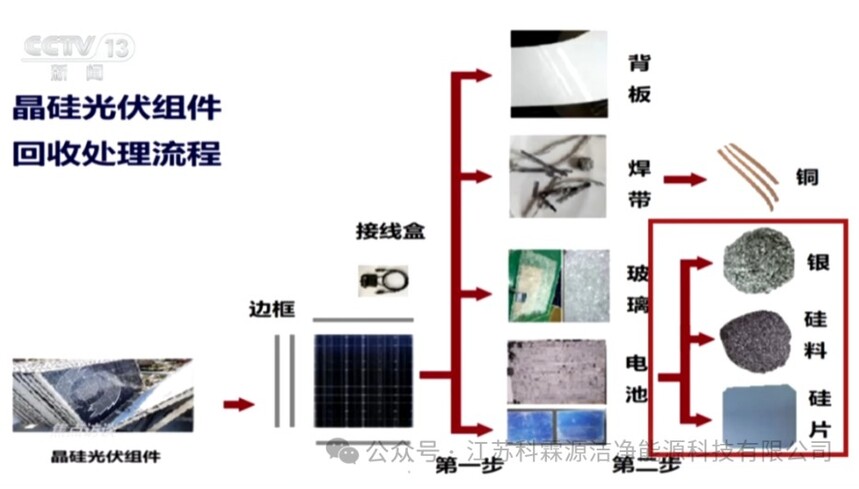 As the scrap period of the components approaches, domestic and foreign scholars have made a lot of exploration of the recycling technology and equipment of the components, and have formed a number of photovoltaic module recycling technology routes, but these new technologies, new processes, and new equipment to achieve market promotion still have a series of problems, mainly in the following three aspects. (1) Technically, the generation and treatment of pollutants in the recycling process. The crystalline silicon cell modules put into production in the early stage mostly use fluorine-containing backplanes, which will produce toxic gases such as hydrogen fluoride after incineration. At the same time, the structure of fluorocarbon compounds in the fluorine-containing backplane is not easy to destroy and cannot be degraded for a long time. Cadmium telluride thin film batteries with high application potential contain highly toxic heavy metal cadmium, which will accumulate through the food chain and endanger human health. In addition, if the recycling process uses chemical solvents to dissolve the ethylene-vinyl acetate copolymer (EVA) in the photovoltaic module, although it can recover high-purity silicon and high-value metal materials, it will also produce a large number of organic and inorganic acids and alkali waste liquid, which is more serious pollution to the environment. (2) In terms of economic benefits, if the recovery of photovoltaic modules cannot produce scale effects, the economic benefits are not obvious. At present, only a handful of companies using PV Cycle as an example are able to achieve profitability. Driven by policies such as the new regulations on electronic and Electrical Waste (WEEE) in Europe, PV Cycle has occupied 90% of the European market share since its inception, and its operating performance has grown continuously. In China, due to the current small scale of recycling, there is no professional enterprise to carry out, recycling technology is still in the laboratory research and development stage, and most technologies have high energy consumption and poor economy, resulting in little market development momentum. (3) In terms of policy, the European Union listed photovoltaic modules as electronic waste management in 2012 [14], requiring that 85% of waste components must be collected centrally, and 80% must be recycled. However, there is no relevant policy for the recycling of photovoltaic modules in China, there is no special supervision and management system for the disposal of photovoltaic modules, and there is no corresponding policy support for the sale of recycled materials, and the current amount of scrap is not large, most enterprises are in the wait-and-see stage.   Scan code and follow us now |