 Chinese
 English
NEWS AND INFORMATION
|
The essential guide to getting started with carbon reduction carbon footprint Swipe left and right to see more  2. Global carbon emission structure From the perspective of regional emissions, at present, the Asia-Pacific region accounts for a relatively large share of global carbon emissions. According to the Statistical Yearbook of World Energy (70th edition) released by British Petroleum (BP), the Asia-Pacific region will account for more than half of the global carbon emissions in 2020, accounting for 52% of the total, of which China accounts for 30.7%, far exceeding other regions. North America accounted for 16.6% of carbon emissions; The European region accounts for 11.1% of carbon emissions. 3. Domestic carbon emissions From the perspective of carbon emission sources, China's carbon emissions mainly come from the energy sector, according to the statistics of the International Carbon Action Partnership organization, in 2020, China's carbon emissions from the energy sector accounted for 77% of the total national emissions; Industrial processes account for 14% of carbon emissions; Agriculture and waste accounted for 7% and 2% of carbon emissions, respectively. From the perspective of regional distribution of carbon emissions, East China is the largest carbon emission region in China, and regional carbon emissions account for about 30% of the country. East China is the main region of heavy industry in China and the key distribution region of high-carbon industries such as electric power and smelting, but it is better than other regions in terms of carbon emission control and recycling technology. North China is the second largest carbon emission region in China, accounting for about 20%. This region is a key region for coal production and consumption in China and lags behind the eastern coastal region in terms of carbon emission control and carbon dioxide recovery technology. If this situation continues, this region will likely become the largest carbon emission region in China in the future. Central China is the third largest carbon emission region in China, and the region has the most dense population distribution in China. The carbon emissions in industrial production and People's Daily life is higher than that in western China. The difference in carbon emissions between South China and Southwest China is relatively small. 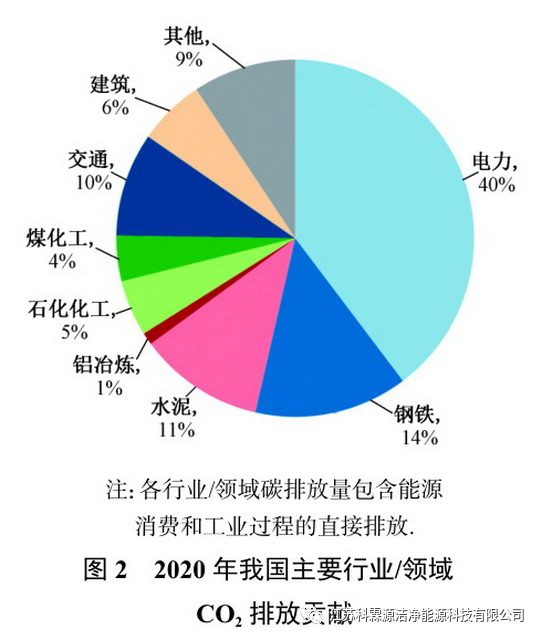 Ⅱ.why reduce carbon emissions? 1. Controlling carbon emissions is an inevitable choice for China's sustainable development The energy structure of our country is rich in coal, poor in oil, and little in gas. Although the absolute quantity of coal resources is huge, the per capita resource occupancy will be poor, China's pressure to control carbon emissions is larger than any other country in the world, especially China or one of the world's more serious waste of energy countries. Therefore, we must take a path of emerging industrialization that controls carbon emissions, and build a resource-saving and environment-friendly society. 2. Controlling carbon emissions is a strategic measure to follow the development law of human society and conform to the development trend of today's world Reducing carbon emissions and protecting the ecological environment has become a broad consensus of people around the world. At the same time, developed countries should shoulder more responsibilities in protecting the ecological environment, and developing countries should also give full play to their advantages as latecomers and avoid following the old path of "pollution first, treatment later" of developed countries. However, for China, to further strengthen the control of carbon emissions is not only a deepening understanding of the law of human society development, but also an urgent need to actively respond to global climate change. Controlling carbon emissions is a strategic choice to establish a responsible image of a major country and take a new path of industrialization. 3. Controlling carbon emissions is a strategic measure that follows the development laws of human society and conforms to the development trend of today's world. In recent years, the problem of resources and the environment in our country has become increasingly prominent, and the situation of carbon emission control is very severe. At present, China's energy efficiency is about 10 percentage points lower than the international advanced level, and energy consumption per unit of GDP is about three times the world average. The environmental situation has become more severe, and the overall deterioration of the ecological environment has not been fundamentally reversed. 3. What are the ways to achieve emission reduction? 1. Energy substitution In the carbon-neutral industry chain, front-end energy replacement refers to strengthening the adjustment of the energy structure, replacing traditional fossil energy with low-carbon instead of high-carbon and clean energy. Jiangsu Kelinyuan gives products higher stability and ease of use with automation and reduces the use of fuel in the process of use so that it can play a greater energy, to achieve the purpose of energy saving and emission reduction. In addition, the fuel used in the gas internal combustion engine and wastewater power purification equipment produced by Jiangsu Kelinyuan is extracted from the biomass of municipal garbage, livestock farm feces, and agricultural and forestry waste. Adopt clean, renewable energy sources instead of non-renewable energy sources. Carbon dioxide emissions caused by human activities mainly come from fossil fuel consumption, and the use of clean energy and renewable energy to replace traditional fossil energy can reduce carbon emissions from the front end of the industrial chain.However, the products of Jiangsu Kelinyuan are far ahead in the international emission standards, and truly comply with the principle of energy saving and emission reduction from the choice of fuel, the maximum role of fuel, and the emission of waste gas comply with the principle of continuous innovation, leading our country's gas power, reaching the international advanced level, breaking foreign technology monopoly, and filling the domestic gaps. 2. Energy conservation In the carbon-neutral industrial chain, the middle end is mainly manifested in improving the level of energy conservation and emission reduction, including industrial structure transformation, improving energy efficiency, strengthening low-carbon technology research and development improving low-carbon development mechanism, etc. Representative industries include steel, chemicals, building materials, paper, nonferrous metals, transportation, and so on. At present, the domestic industries with high carbon emissions are mainly power, steel, chemical, paper, transportation, construction, and other industries. Under the requirements of carbon peak and carbon neutral development, these industries will be the key industries for energy conservation and emission reduction in the future. Jiangsu Kelinyuan Clean Energy Technology Co., Ltd. is committed to the development of the "double carbon" strategic goal, the company is engaged in gas internal combustion engine power generation and wastewater purification equipment, which can be through domestic waste, kitchen waste, organic sewage, farm manure, and agricultural and forestry waste extract organic matter for power generation into the municipal network, It not only reduces the greenhouse gas emissions of landfill and biogas generated by sewage discharge, reduces the cost of waste treatment, but also reduces environmental pollution, reduces the cost of electricity for enterprises, improves economic efficiency, and has significant energy saving and emission reduction benefits. 3. Carbon absorption The carbon sequestration function of forest, wetland, and grassland ecosystems plays an important role in achieving the goal of carbon neutrality, among which forest carbon sequestration is the most economical means of "carbon sequestration" in the world. China's forest area and forest stock have maintained "double growth" for 30 consecutive years. According to the introduction of the National Forestry and Grassland Administration in December 2020, China's forest carbon reserves are currently more than 9.2 billion tons, and the average annual increase in forest carbon reserves is more than 200 million tons, equivalent to about 700 to 800 million tons of carbon sink. During the "14th Five-Year Plan" period, China's forest coverage rate is expected to reach 24.1%, and the forest stock volume reaches 19 billion cubic meters. With the increase in forest coverage rate and forest stock volume, China's forest carbon sink will gradually increase in the future. Follow us |